
J2EE Course in Delhi
Master J2EE technologies including Servlets, JSP, Hibernate, and Spring Framework with real-time project training. Build enterprise-level web applications and become industry-ready.
About J2EE Course
J2EE (Java 2 Enterprise Edition) is used to build scalable, secure, and enterprise-level web applications. It is widely adopted by banks, e-commerce platforms, and large IT companies. This course focuses on practical development skills required to build real-world enterprise applications.
What You Will Learn In This Course?
Servlets
Learn to build server-side programs that handle client requests and generate dynamic web responses using Apache Tomcat.
JSP
Create dynamic web pages by combining Java code with HTML for interactive and data-driven applications.
JDBC
Connect Java applications to databases and perform operations like storing, updating, and retrieving data.
MVC Architecture
Understand the Model-View-Controller pattern to build structured, scalable, and maintainable web applications.
Hibernate
Use Hibernate ORM to simplify database operations and manage data without writing complex SQL queries.
Spring Core
Learn dependency injection and core concepts of Spring to build flexible and enterprise-ready applications.
Spring MVC
Develop structured web applications using controllers, request mapping, and form handling with Spring MVC.
Introduction to Spring Boot
Build production-ready applications quickly using auto-configuration and simplified project setup in Spring Boot.
Course Duration & Mode
Duration
3 months
Mode
Offline & Online
Batch
Weekday & Weekend
Practical Sessions Included
J2EE Course Curriculum
- Overview of Java Web Technology
- Purpose of Servlets
- Servlets vs Other Technologies
- Purpose of JSP
- Configuring Server
- Configuring Development Environment
- Testing the Server
- Structure of Servlets
- Servlet Mapping
- Servlet Generating Plain Text
- Servlet Generating HTML
- Servlet Lifecycle
- Servlet Debugging
- Uses of Form Data
- HTML Forms
- GET vs POST Method
- Form Validation
- Reading Request Parameters
- HTTP Request
- HTTP Response Header
- RequestDispatcher
- sendRedirect
- ServletConfig
- Filters
- Session in Servlet
- Cookies Handling
- URL Rewriting
- Understanding JSP
- Benefits of JSP
- JSP Lifecycle
- JSP in Real World
- Static vs Dynamic Content
- JSP Expressions
- Servlets vs JSP
- JSP Scriptlets
- JSP Expressions
- JSP Declarations
- Out
- Request
- Response
- Session
- Page
- Config
- Page Directive
- Include Directive
- TagLib Directive
- jsp:include
- jsp:forward
- jsp:useBean
- jsp:setProperty
- Overview of JDBC
- JDBC Drivers
- Create Connection
- Prepared Statements
- ResultSet Handling
- SQL Exception Handling
- Eclipse IDE
- Apache Tomcat Server
- Overview of HTML
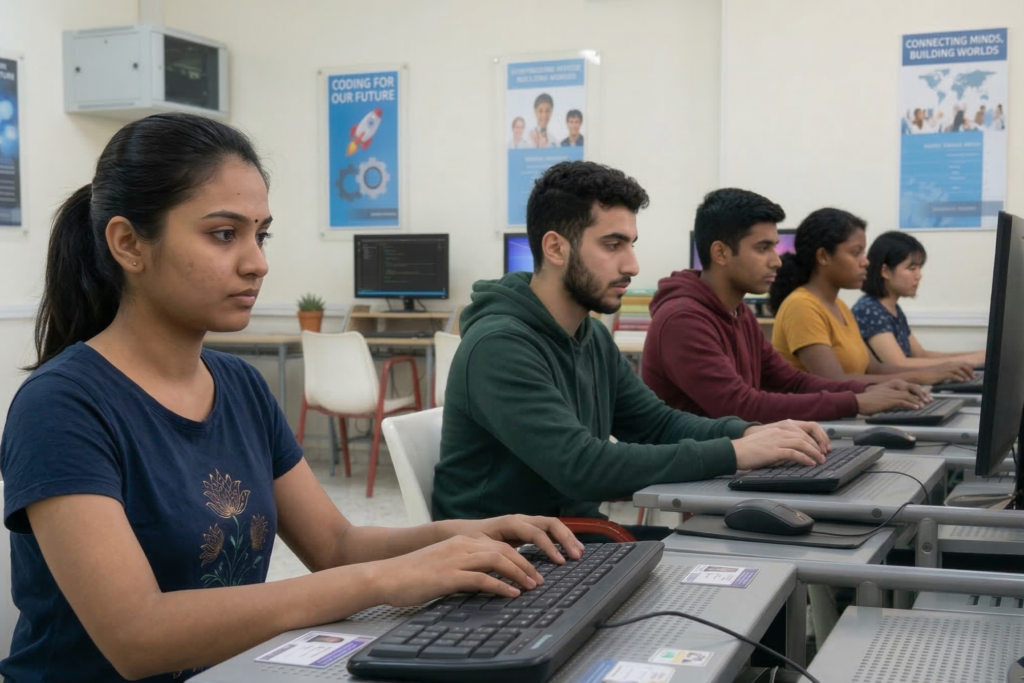
Practical Based Project Training
At VSIT, students gain hands-on experience by working on real-world J2EE projects. Our practical training in Delhi helps learners build enterprise-level web applications, making them job-ready for advanced Java development roles.
- Core J2EE Concepts – Learn Servlets, JSP, JDBC, and MVC architecture for building dynamic web applications.
- Portfolio Building – Develop strong J2EE projects to showcase your backend and web development skills.
- Web Application Development – Build scalable and secure web applications using Java technologies.
- Database Integration Skills – Connect applications with databases to manage and process data efficiently.

Why Learn J2EE?
J2EE (Java 2 Platform, Enterprise Edition) is a robust technology used for building scalable and secure enterprise-level web applications. At VSIT, students gain practical experience with Java-based frameworks, work on real-time projects, and develop job-ready skills for enterprise software development careers.
- Enterprise-Level Demand – J2EE is widely used by large organizations to build secure and scalable business applications.
- Backend Development Expertise – Learn to build dynamic web applications using Servlets, JSP, and enterprise frameworks.
- Wide Career Opportunities – Opens roles in Java development, backend engineering, and enterprise application development.
- Real-Time Project Experience – Gain hands-on practice by developing industry-based web applications.
- Secure Application Development – Understand how to build secure, reliable, and high-performance applications.
Who Should Join This Course?
This course is suitable for individuals who want to build strong skills in Java enterprise development and pursue careers in software development.

What Are The Career Opportunities After J2EE Course?
After completing a J2EE course, students gain skills in building scalable, secure, and enterprise-level web applications using Java technologies, making them highly valuable in the software development industry. At VSIT, the focus on practical training and real-world projects helps learners become job-ready for various development roles.
J2EE Developer
Java Developer
Full Stack Developer
Backend Developer
Web Application Developer
Software Engineer
Why Choose VSIT?
Learn from experienced mentors who provide practical guidance and industry insights.
Get personalized attention and better understanding through small group training sessions.
Build real skills with hands-on training focused on industry requirements effectively.
Prepare confidently for interviews with guidance, practice, and expert tips
Learn at your own pace with classes available on weekdays and weekends.
Earn industry-recognized certification that validates your skills and enhances your resume.
Frequently Asked Questions
The J2EE training program typically lasts 3 to 6 months. Fast-track and weekend batches are also available.
Yes, students with basic Java knowledge can join. We start from fundamentals and gradually move to advanced frameworks.
Yes, a course completion certificate is provided. Internship certificates are also issued where applicable.
Yes, VSIT provide a free demo session. This helps you understand our teaching methodology.
The fee structure is affordable and depends on the selected module. Please contact us for the latest fee details.